

Le ricette con il vermouth
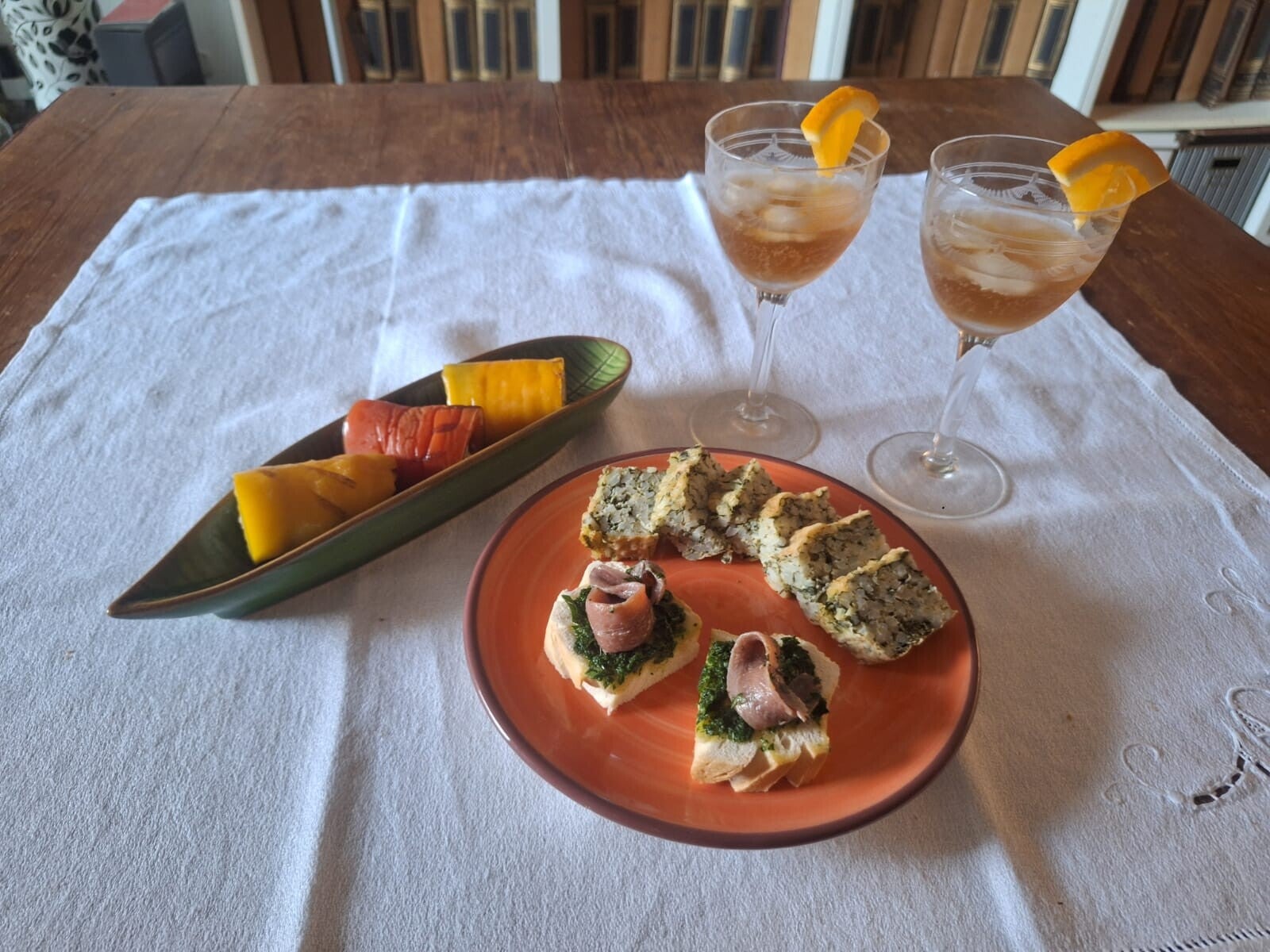
The apetizers
In Piedmontese cuisine, a variety of influences have come together to create dishes that are both light and full of flavour. Olive oil from the Ligurian Riviera is used alongside Alpine butter; red meats from the valleys are paired with poultry and other white meats; vegetables rooted in the region’s peasant traditions feature prominently in everyday cooking; and Piedmont’s pastry-making reflects the influence of French desserts, particularly in baked custards and biscuits.
We are going to share how these traditional recipes have been interpreted by our grandparents, in our family, and how the spiced taste of Vermouth is able to enhance traditional flavors. Glasses, the tablecloth with the hand-embroidered initials of Rina Ghione, my grandfather's wife, even the old wooden table, not only the vermouth receipt, comes from our history.
1. Piedmontese Apetizers
In Piedmont, appetizers are rarely an afterthought. A generous selection of antipasti often arrives at the table before the meal itself, showcasing the region's remarkable talent for transforming simple ingredients into memorable dishes.
Piedmontese antipasti are wonderfully varied, served both hot and cold, and celebrated for their delicate yet satisfying flavors. Here are three classic examples that pair beautifully with a Spritz made with Soria Vermouth: Pepper Rolls filled with tuna and capers, Anchovies in Parsley Sauce, and a savory Rice Chards Torte.
With a chilled glass of Vermouth , these appetizers are sure to be a crowd-pleaser.
Ingredients
1. For the Pepper Rolls
-
1 red bell pepper
-
1 yellow bell pepper
-
180 g tuna packed in olive oil
-
15 capers
-
a few leaves of fresh marjoram or basil (not both)
-
extra-virgin olive oil
2. For the Anchovies in Parsley Sauce
-
11–16 anchovy fillets
-
1 garlic clove, finely sliced (optional)
-
fresh parsley, finely chopped
-
extra-virgin olive oil
-
salt, if desired
3. For the savory Rice Chards Torte
-
200 g curds and spinach
-
100 g Carnaroli rice
-
2 eggs
-
50 g Parmesan cheese
-
1 little onion
-
1 garlic clove (optional)
-
aromatic herbs: rosemary, marjoram, parsley, thyme
-
extra-virgin olive oil
-
vegetable broth, as needed
-
white pepper, salt and nutmeg
Method
1. Several hours ahead—or preferably the morning of serving—roast the peppers in a 180°C oven for about 1 hour, until tender and lightly blistered.
Remove the peppers from the oven and place them in a bowl. Cover tightly with a clean kitchen towel and then with plastic wrap, allowing them to steam as they cool. This will make them easier to peel.
Meanwhile, prepare the filling. In a food processor, blend the tuna and capers with enough olive oil to create a smooth, spreadable mixture. Add a little marjoram or basil to taste. Refrigerate until needed.
Once the peppers have completely cooled, peel away the skins and cut the flesh into broad strips, about 4–5 cm wide. Lay the strips flat and spread each with a spoonful of the tuna filling. Roll them up neatly and arrange on a serving platter.
2. To prepare the anchovies, arrange the fillets in a shallow serving dish. Scatter over the chopped parsley and, if using, the sliced garlic. Cover generously with olive oil and refrigerate.
Serve the anchovies with their parsley-infused olive oil alongside the pepper rolls. Accompany with slices of crusty white bread and traditional Piedmontese grissini.
3. Wash and clean the chards and the aromatic herbs. In a saucepan, cook gently half an onion thinly sliced in olive oil, then add the rice and toast it for a few minutes. Cover the rice with hot vegetable broth.
Meanwhile, chop the chards and add them to the rice. When the rice is al dente - after about two -thirds of the total cooking time indicated - let it cool.
Add to the half-cooked rice the two beaten eggs, mixed with the grated Parmesan cheese; stir in the finely chopped aromatic herbs, salt, pepper, and a pinch of nutmeg. Mix thoroughly until everything is well combined.
Butter a baking dish and sprinkle it with breadcrumbs. Pour in the mixture, spread it evenly, and smooth the surface. Sprinkle with more Parmesan cheese and add a few sprigs of rosemary.
Bake the Torta di riso in a preheated oven at 180°C for about 50 minutes, or until the top is beautifully golden and a light crust has formed.
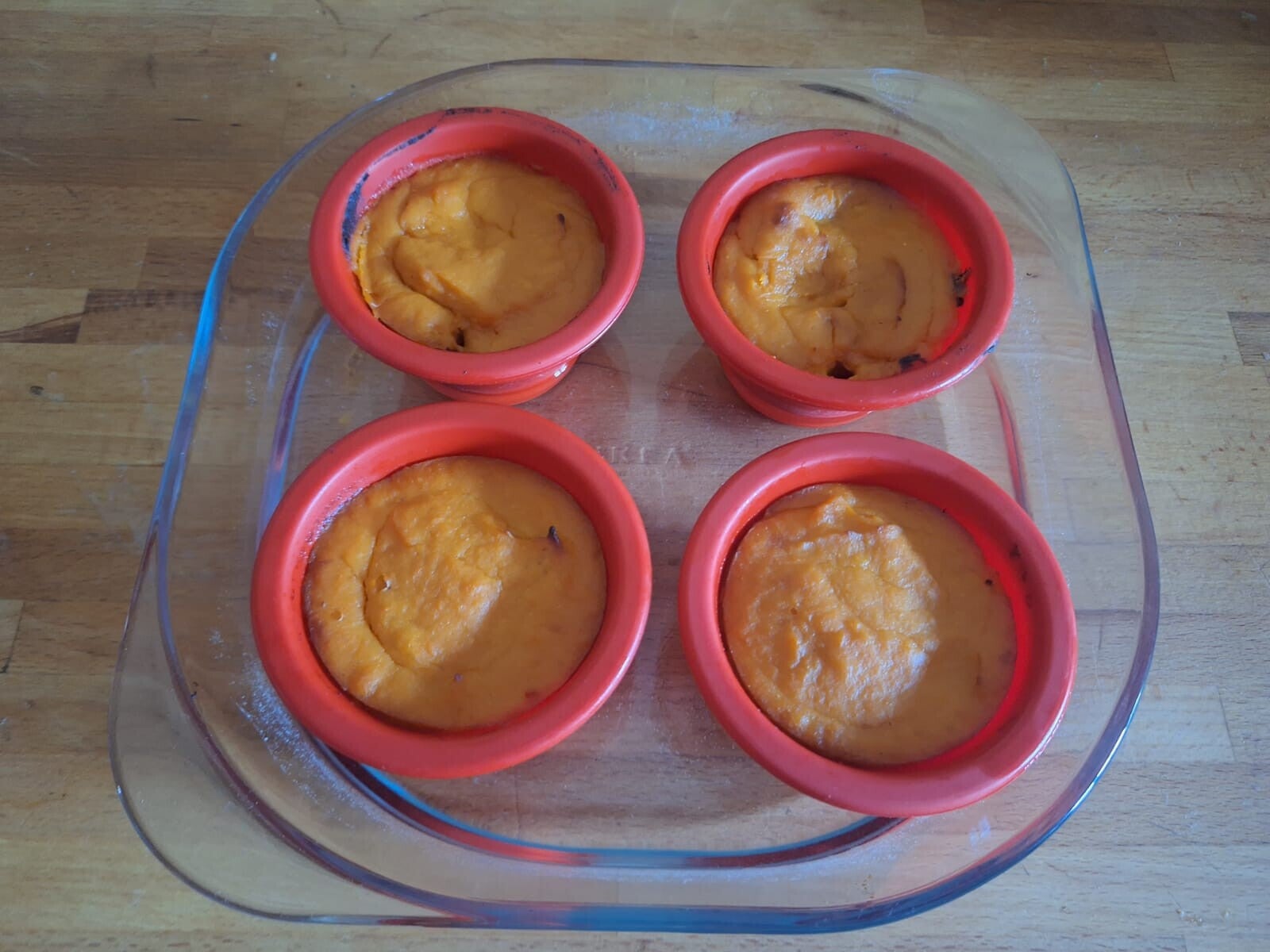
2. Sweet Potato Flan with Vermouth
Traditionally, savoury flans were prepared mainly in Piedmont. As the etymology of the word teaches, flan came from France and remained a regional speciality until it was later adopted by modern restaurants elsewhere.
Savoury flans are typically made from a vegetable purée - chards, zucchini, or asparagus - thicked with eggs and Parmesan cheese and baked in a bain-marie. The eggs should not be whipped; otherwise, you will end up with a soufflé rather than a flan.
Because flans are vegetable-based dishes, they are often served with cheese or herb sauces to create a contrast of flavours. For this version, we added Vermouth into the purée, which makes even the simplest vegetable - the sweet potato - more tasty and appetizing.
Ingredients
-
400 g peeled sweet potatoes (about 480 g unpeeled)
-
200 g trimmed leek
-
20 g grated Parmesan cheese
-
1 egg
-
100 ml vermouth
-
Olive oil
-
a knob of butter
-
salt and white pepper
-
vegetable broth, as needed
Method
Thinly slice the leek. Heat a small amount of olive oil and the butter in a saucepan, add the leek, then pour in enough vegetable broth to barely cover it. Cook gently for about 25 minutes, until softened.
Meanwhile, peel the sweet potatoes and cut them into small cubes. Add them to the leek and continue cooking until tender, adding a little more broth if necessary.
Once the vegetables are fully cooked, blend them into a smooth purée. Stir in the grated Parmesan cheese. Lightly beat the egg and mix it into the purée, then add the vermouth and season with salt and white pepper to taste.
Divide the mixture among individual ramekins or moulds. Place them in a baking tray filled with hot water and bake in a preheated oven at 180°C for 45–50 minutes.
To check for doneness, insert a knife into the centre of a flan; it should emerge only slightly moist.
Serve on its own or with a delicate cheese sauce.
3. Agnolotti del Plin with Vermouth Sauce
Few dishes capture the spirit of Piedmont quite like agnolotti del plin. These tiny hand-pinched pasta parcels are traditionally filled with a mixture of roasted meats and borage, creating a filling that is rich yet remarkably delicate. The sweetness of the rabbit, pork and greens is beautifully balanced by a Vermouth sauce, whose herbal, spicy notes and gentle bitterness add depth and contrast to the dish.
Making agnolotti del plin by hand is a rewarding but time-consuming process. Those who prefer a shortcut can often find excellent fresh agnolotti at artisan pasta shops. Alternatively, the same filling may be used to make larger ravioli, which are easier to shape while retaining the character of the original recipe.
The Vermouth sauce can also be enjoyed with fresh goat cheeses.
Ingredients
For the Filling
-
120 g cooked beef shoulder or chuck roast
-
120 g cooked pork loin
-
120 g cooked rabbit meat
-
120 g cooked borage, well drained and squeezed dry
-
3 tablespoons grated Parmesan cheese
-
2 eggs
-
1 garlic clove
-
mixed fresh herbs (bay leaf, rosemary, thyme and marjoram)
-
salt and freshly ground black pepper
For the Pasta
-
300 g (1⅔ cups) all-purpose flour
-
3 eggs
-
50 ml Soria Vermouth
For the Vermouth Sauce
-
60 g leek, finely sliced
-
120 ml Vermouth
-
1 tea spoon of cornstarch
-
1 bay leaf
Method
The day before making the agnolotti, cook the beef, pork and rabbit separately, preparing each as a simple roast. Use olive oil, the garlic clove and the mixed herbs to flavour the meat as it cooks.
Cook the borage separately in a small amount of water until tender.
Allow both the meats and the borage to cool completely. Finely chop or pulse each ingredient separately in a food processor, then combine them in a large bowl. Add the grated Parmesan and eggs, season with salt and pepper, and mix thoroughly. Cover and refrigerate overnight.
The following day, make the pasta dough by combining the flour and eggs. Knead until smooth, then wrap and refrigerate for 1 hour.
Roll the dough into long thin sheets. Place small portions of filling along the sheet, fold the pasta over the filling and seal the parcels by pinching the dough between each mound with the traditional plin gesture—the word plin means “pinch” in the local Piedmontese dialect. Numerous online tutorials demonstrate this technique, as well as the simpler method for shaping ravioli.
For the Vermouth sauce, gently sweat the leek untilsoft. Blend the leek until creamy, add the Vermouth and simmer until reduced by half. Add the cornstarch and mix with a whisk so that no lumps form. Blend until smooth, add the bay leaf and keep warm.
Shortly before serving, cook the agnolotti in plenty of boiling salted water and about 50 ml of Vermouth for about 4 minutes, or until tender. Drain well and toss gently in a mixture of butter and olive oil.
Arrange the agnolotti on warmed plates and spoon small drops of the Vermouth Sauce around and over the pasta. Serve immediately.

Storie raccontate in pixel
4. Small Hazelnut Biscuits for Vermouth
The Piedmont hazelnuts have been awarded the European Union’s P.G.I. (Protected Geographical Indication) status. Beyond the vineyards, in the upper reaches of the Langhe - where my grandfather lived- hazelnut trees blanket the hillsides. Their fruit is widely used both by artisanal bakeries and by worldwide successful brands, which have combined hazelnut paste with chocolate.
To accompany Vermouth after lunch or dinner, these small hazelnut biscuits, served with a piece of dark chocolate, offer a simple yet delicious dessert.
Ingredients
-
50 g chopped hazelnuts
-
50 g hazelnut flour
-
90 g cane sugar
-
90 g softened butter (not melted)
-
100 g flour (Type 0 or 1)
-
1 egg
-
a pinch of salt
-
a pinch of white pepper
Method
Combine all the ingredients in a stand mixer until a smooth mixture forms.
Transfer the mixture to a sac à poche and place it in the refrigerator for about 30 minutes. When it is cold enough form strips approximately 4-5 cm long onto a tray lined with baking paper.
Bake in a preheated oven at 180°C for 15/20 minutes, until lightly golden.
Let the biscuits cool before serving with dark chocolate and a glass of Soria Vermouth.